
Anilox Roll Cleaner for Consistent Print Quality
Professional anilox roll cleaning solutions designed to remove dried ink and residue, restore cell volume, and maintain stable ink transfer in flexographic and gravure printing.

What Is an Anilox Roll Cleaner?
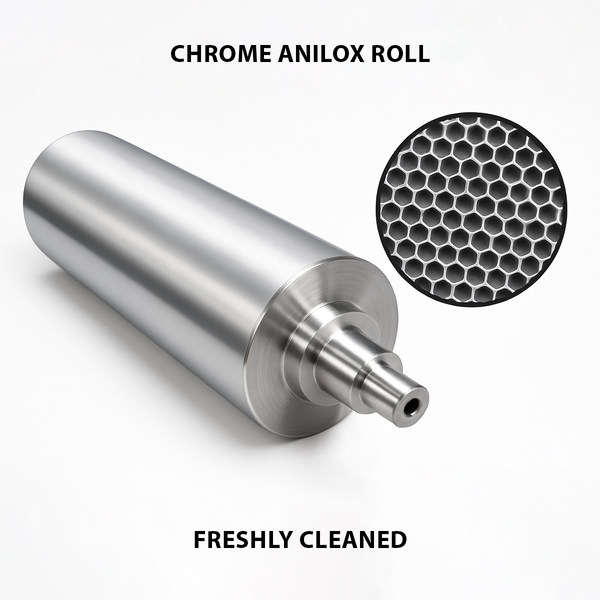
An anilox roll cleaner is a specialized cleaning solution or system used to remove dried ink, coating residue, and other contaminants from the microscopic cells of an anilox roll. Because anilox rolls precisely control ink volume and transfer, proper cleaning is essential for maintaining consistent print density, color accuracy, and overall print quality.
Anilox roll cleaning can be performed using liquid chemical cleaners for manual cleaning, or through equipment-based systems such as laser or ultrasonic cleaning, depending on the level of contamination, maintenance frequency, and operational requirements.

Why Regular Anilox Roll Cleaning Is Essential
Without proper cleaning, anilox rolls gradually lose performance. Common problems caused by clogged anilox cells include:
- Reduced ink transfer and print density
- Inconsistent color reproduction
- Increased setup time and press adjustments
- Higher ink consumption and material waste
- Premature replacement of anilox rolls
Regular use of a suitable anilox roll cleaner helps maintain optimal cell volume, improves print consistency, and supports efficient press operation.
Types of Anilox Roll Cleaners
Different printing environments require different anilox cleaning approaches. Below are the most common types of anilox roll cleaning solutions used in professional printing operations.

Laser Anilox Roll Cleaning Systems
Laser anilox roll cleaning systems use high-energy laser beams to remove ink residue from anilox cells through controlled thermal ablation. This method does not rely on chemical cleaners and is typically performed using specialized equipment.
Key characteristics:
- Chemical-free cleaning process
- Highly effective for heavily contaminated rolls
- Requires dedicated laser equipment
- Higher capital and operating costs
- Often used as a centralized or outsourced service
Laser cleaning is generally selected for deep or restorative cleaning rather than routine daily maintenance.
Liquid / Chemical Anilox Roll Cleaners
Liquid anilox roll cleaners use specially formulated chemical agents to penetrate dried ink and coating residue inside ceramic anilox cells. They are typically applied manually using non-abrasive tools such as melamine sponges, pads, leather cleaners, or brushes, followed by rinsing.
Key characteristics:
- Penetrates deeply into clogged anilox cells
- Effective on water-based, solvent, and UV inks
- Suitable for routine and periodic cleaning
- Non-abrasive when used as directed
- Requires minimal equipment
Liquid cleaners are widely used in flexographic and gravure printing operations due to their balance of cleaning effectiveness, safety, and ease of use.

Ultrasonic Anilox Roll Cleaning Systems
Ultrasonic anilox roll cleaning systems use cavitation generated by ultrasonic waves in a liquid bath to remove contaminants from deep inside anilox cells.
Key characteristics:
- Thorough deep-cleaning capability
- Effective for severe cell blockage
- Requires immersion equipment and setup time
- Typically used for periodic maintenance rather than daily cleaning
Many printing operations combine ultrasonic cleaning with liquid chemical cleaning to maintain optimal anilox roll performance.

Applications of Anilox Roll Cleaners
Anilox roll cleaners are used across a wide range of printing applications, including:
- Flexographic printing
- Gravure printing
- Packaging and label printing
- Paper, film, and flexible packaging substrates
- Water-based inks
- Solvent-based inks
- UV inks (with appropriate compatibility considerations)
Selecting the right anilox roll cleaner ensures effective cleaning while protecting the ceramic surface of the roll.

How Anilox Roll Cleaners Work
While formulations vary, most anilox roll cleaners follow a similar cleaning process:
- The cleaner is applied evenly to the anilox roll surface
- Active agents penetrate clogged ceramic cells
- Dried ink and residue are chemically broken down
- Contaminants are lifted from the cell structure
- The roll is rinsed thoroughly and dried
This process restores effective cell volume and improves ink transfer consistency.
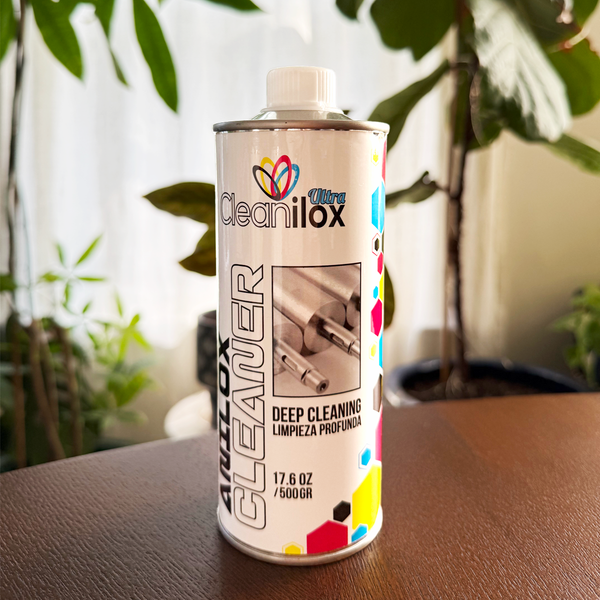
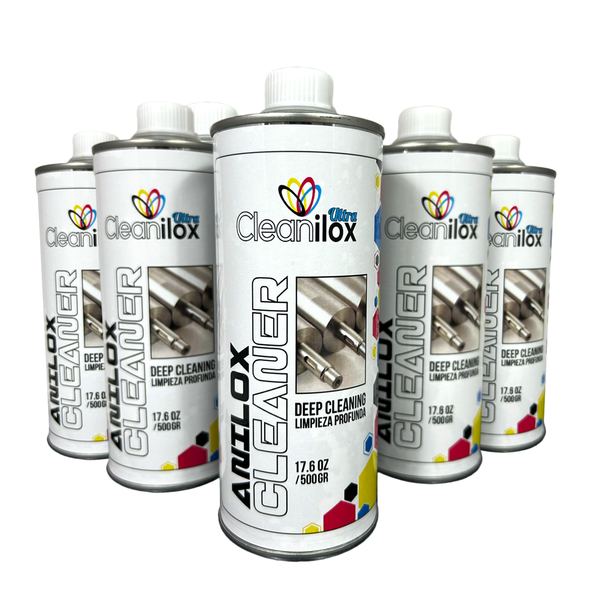
Recommended Anilox Roll Cleaner – Cleanilox (Liquid Type)
For printers seeking a reliable and effective liquid anilox roll cleaner, Cleanilox is a proven solution designed for professional printing environments.
Cleanilox is a liquid-type anilox cleaner formulated to penetrate dried ink and residue inside ceramic anilox cells. When used with proper application methods—including brushing or wiping with non-abrasive tools—it helps restore effective cell volume while supporting stable ink transfer.
Key benefits of Cleanilox:
- Liquid-type anilox roll cleaner
- Effective removal of dried ink and residue
- Suitable for ceramic anilox rolls
- Can be used with leather or brush-based cleaning methods
- Used in professional flexographic printing operations

Frequently Asked Questions About Anilox Roll Cleaners
How often should anilox rolls be cleaned?
Light cleaning is typically performed daily, while deeper cleaning is done periodically depending on ink type, usage, and print conditions.
Are anilox roll cleaners safe for ceramic rolls?
Yes, when formulated specifically for ceramic anilox rolls and used according to instructions.
Can liquid anilox roll cleaners remove dried ink?
Yes. Liquid anilox roll cleaners are formulated to penetrate and break down dried ink inside anilox cells. Mechanical tools such as leather cleaners may be used together to enhance cleaning effectiveness.

